
How to Store and Reconstitute the Wolverine Blend Safely in the Lab
How to Store and Reconstitute the Wolverine Blend Safely in the Lab
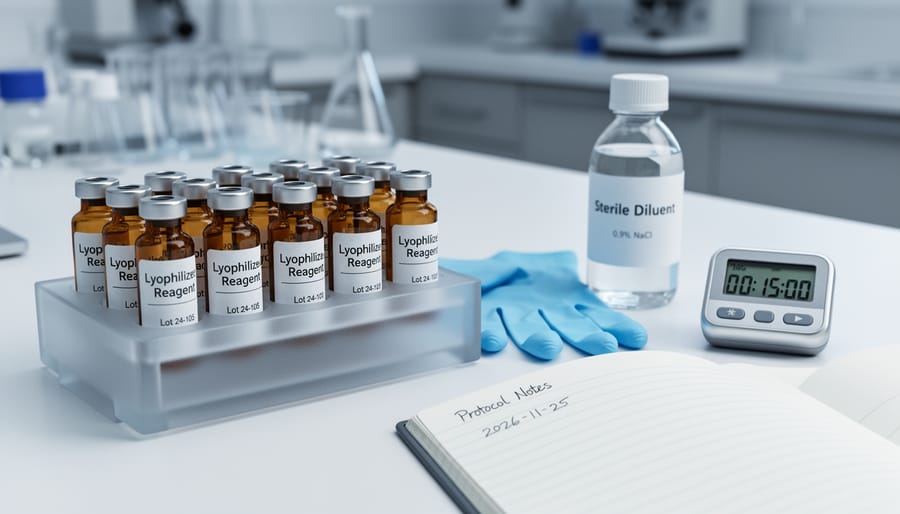
Store the Wolverine Blend lyophilized in a cold, dark, dry space, then reconstitute it with sterile diluent using a slow, controlled technique. Done right, the whole process takes under 15 minutes and protects both your staff and the integrity of your research material. Product specifics, including the formulation, are listed on the https://kylopeptides.com/product/wolverine-blend/ page, and your lab’s handling steps should always follow the supplier’s documentation. The difficulty is low, but the prerequisites matter: clean gloves, labeled vials, and a written protocol everyone has signed off on.
Why does the method work? Peptide blends degrade with heat, light, moisture, and agitation, so every step below aims to limit one of those four threats.
Safe handling is also a skill your team can build. Labs that train for workplace readiness tend to see fewer handling errors, and staff who master clear protocols gain confidence and visible credibility on their career paths.
Key Takeaway: Safe storage protects regulatory compliance, employee safety, and lab efficiency all at once. Label everything, keep the material cold and dry, and follow one written protocol every time.
Let’s walk through the equipment, safety checks, and exact steps.
Essential Tools and Materials for Safe Storage and Reconstitution
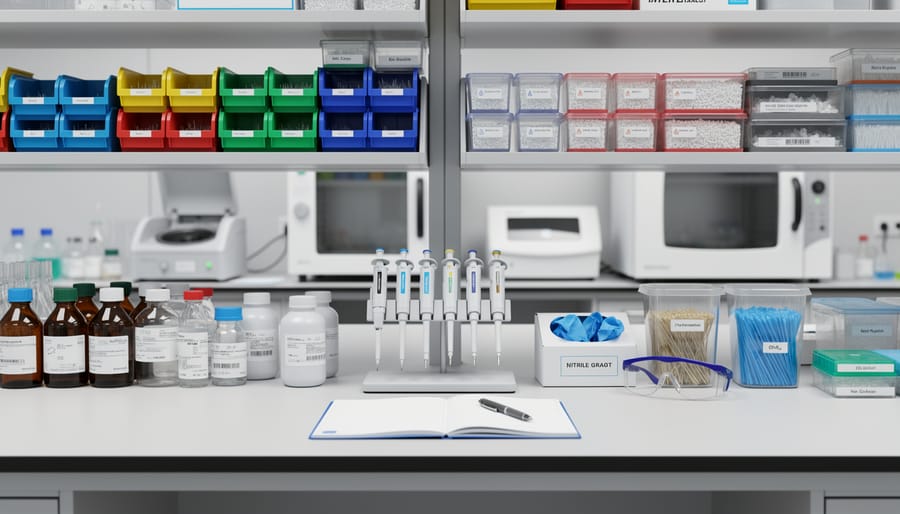
Before you open a single vial, set up your workspace. Most storage and reconstitution mistakes come from scrambling for a missing item halfway through the process, not from a lack of skill. A prepared bench is a safe bench, and treating setup as a real step in your protocol, rather than an afterthought, is a form of change management in miniature: you replace improvised habits with a consistent routine the whole team can follow.
Gather and check the following before you begin:
- Airtight, clearly rated storage containers suited to the blend’s storage conditions.
- Personal protective equipment: nitrile gloves, safety goggles, and a lab coat.
- Pre-printed labels, a permanent marker, and tape that holds up in cold or damp conditions.
- Calibrated pipettes, graduated cylinders, or a precision scale for accurate measurement.
- The correct reconstitution solvent, verified against your protocol and within its expiry date.
- Clean mixing vessels, stir tools, and sterile disposable tips.
- A thermometer or temperature logger for the storage unit.
- Spill kit, waste containers, and your written procedure within arm’s reach.
Once everything is on the bench, do a quick inspection. Confirm that your measuring devices carry a current calibration date, that containers are intact with no cracks or worn seals, and that your PPE fits properly. Replace anything questionable rather than hoping it will hold up.
Organization matters just as much as the items themselves. Arrange tools in the order you will use them, keep clean and used materials separate, and make sure every label is filled in before the blend goes into storage, not after. A new team member should be able to look at your setup and understand the workflow at a glance.
Finally, make this checklist a shared habit. Posting it near the workstation and reviewing it at the start of each session builds confidence across the team and keeps every handoff consistent from one shift to the next.
Critical Safety Precautions for Lab Personnel
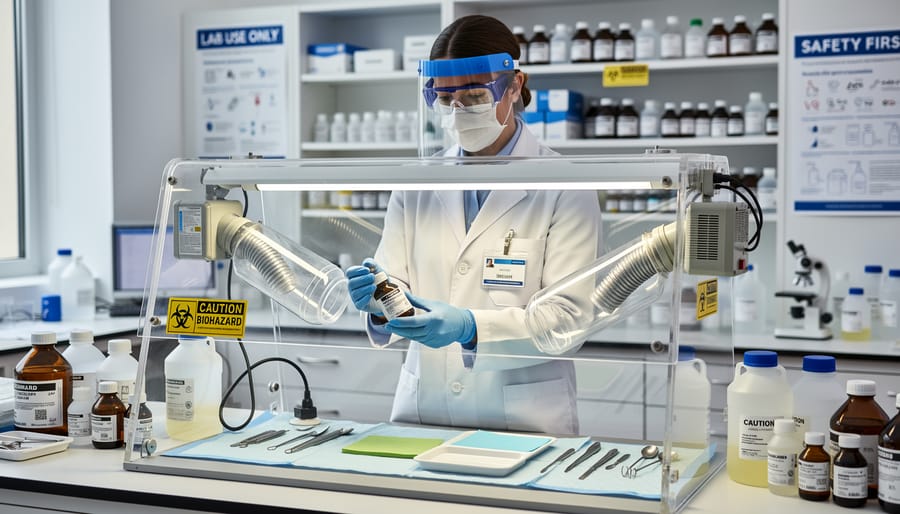
Handling the Wolverine Blend safely starts with respecting what you don’t yet know about it. Before the first vial leaves storage, read the manufacturer’s safety data sheet (SDS) and your lab’s own protocol. If either is unclear, ask your supervisor before you proceed. That one habit prevents more incidents than any piece of equipment.
The main risks are straightforward. Powders and concentrates can become airborne during weighing or transfer, so inhalation and skin or eye contact are the first concerns. Temperature swings can degrade stored material and make it behave unpredictably. Mislabeled or unlabeled containers, meanwhile, cause confusion that leads to errors, especially on busy shifts or when new team members are still learning the layout.
Your lab’s safety policy should spell out personal protective equipment (PPE), ventilation requirements, and spill response. As a baseline, wear gloves, a lab coat, and eye protection, and work in a fume hood or ventilated space whenever your protocol calls for it. Know where the eyewash station and emergency shower are before you need them.
A few simple do’s and don’ts keep everyone on the same page:
Do:
– Confirm labels and expiration dates before every use.
– Keep work surfaces clean and clutter-free.
– Report spills, exposures, and near-misses right away, no matter how minor.
– Complete refresher training when protocols change.
Don’t:
– Eat, drink, or store personal items in the work area.
– Improvise substitutions for equipment or steps.
– Skip documentation because you’re short on time.
– Leave open containers unattended.
Speaking up is part of the job, not a sign of weakness. Teams that treat near-miss reporting as a learning opportunity build stronger safety cultures, and that protects both people and careers.
Step-by-Step Procedure: Storing and Reconstituting the Wolverine Blend

A clear sequence keeps everyone on the same page, whether you’re a seasoned technician or newly onboarded. Work through the steps below in order, and don’t skip ahead. Before you begin, confirm that the product label and your lab’s standard operating procedure (SOP) match the Wolverine Blend you’re handling, since manufacturer instructions take priority over any general guidance.
- Check the label and lot information. Confirm the product name, lot number, expiry date, and storage conditions printed on the vial or container, and compare them against your inventory record.
- Inspect the sealed container. Look for cracks, a loose cap, discoloration, or condensation inside the packaging. If anything looks off, set the vial aside and report it to your supervisor rather than using it.
- Confirm the storage environment. Verify that your refrigerator or freezer is holding the temperature your SOP requires, and check the logged readings before placing or removing any material.
- Put on your protective equipment. Gloves, a lab coat, and eye protection go on before you open the storage area or handle any vial.
- Prepare a clean workspace. Wipe down the work surface, gather your diluent and supplies, and label your receiving tube or syringe with the date, your initials, and the contents.
- Bring the vial to the correct temperature. If your SOP calls for it, let the sealed vial sit at room temperature for the specified time before opening. Never speed this up with heat.
- Reconstitute with the specified diluent. Add the exact volume called for in your protocol, directing the liquid down the inside wall of the vial instead of onto the powder.
- Mix gently. Swirl or slowly roll the vial until the contents dissolve. Avoid vigorous shaking, which can foam the solution or damage sensitive components.
- Check the finished solution. It should look clear and consistent, with no particles or cloudiness. If it doesn’t, don’t use it.
- Label and store the reconstituted blend. Record the date and time, the diluent and volume used, and the discard-by date, then return it promptly to the correct storage conditions.
- Document and clean up. Log the activity in your lab record, dispose of waste in the proper containers, and wipe down your workspace.
Two habits make this process far safer. First, work at an unhurried pace. Most storage and reconstitution errors happen when someone is rushing between tasks, so give yourself a clear block of time. Second, label everything as you go, not at the end. An unlabeled tube is a risk to the next person who picks it up, and good labeling is one of the simplest ways to protect your colleagues.
If a step is unclear or something doesn’t match what you expected, pause and ask. Checking with a supervisor or safety officer isn’t a sign of inexperience; it’s exactly the kind of judgment that builds trust in a lab team. Over time, following this routine consistently will make each step feel automatic, and that confidence is a real career asset in any technical workplace.
Verification and Compliance: Ensuring Process Success
Verification starts the moment the Wolverine Blend is stored or reconstituted, not days later. Check each step against the written protocol while the details are fresh, and have a second team member confirm the work. A second set of eyes catches label errors and storage slips before they become incidents.
Strong verification habits include:
- Confirm container labels show the blend name, concentration, preparation date, and your initials.
- Check that storage temperature logs fall within the specified range.
- Inspect the reconstituted solution for clarity, color, and any unexpected particulates.
- Record lot numbers, volumes, and diluent details at the time of preparation.
- Have a colleague countersign the log entry the same day.
Good records protect you and your team. Following a structured approach to hazardous chemical inventory record-keeping keeps every container traceable from receipt to disposal, which makes audits far less stressful.
Compliance doesn’t end with paperwork. Review your lab policies on a regular schedule, flag gaps early, and share what you learn in team meetings. When staff see that checks lead to real improvements, they take ownership of the process. That shared ownership is how you build a sustainable safety culture where careful verification becomes second nature.
Common Questions About Handling the Wolverine Blend
How long can reconstituted Wolverine Blend be kept?
Follow the stability window on the manufacturer’s data sheet and your lab’s written protocol, and label every container with its reconstitution date and time. If the label is missing or the window has passed, discard the material rather than guess.
What is the most common mistake staff make?
Skipping the preparation steps when a deadline is tight, especially re-checking labels and putting on the right protective equipment. A consistent routine keeps small shortcuts from turning into incidents.
What should I do if a spill happens?
Stop work, alert nearby colleagues, and follow your lab’s spill procedure and the safety data sheet. Report the incident to your supervisor so the record is complete.
Can HR support safe handling practices?
Yes. HR teams can schedule refresher training, keep sign-off records current, and encourage open reporting without blame. Pairing safety routines with green workplace practices, such as responsible disposal and waste reduction, also helps build a culture where careful handling is the norm.
Questions like these usually surface during onboarding, so it pays to answer them before anyone handles the blend for the first time. Keep this list somewhere visible, and update it whenever your protocol changes. When staff know where to find a quick answer, they are far less likely to improvise.
Conclusion: Empowering Safer Labs Through Best Practices
Safe storage and reconstitution of the Wolverine Blend comes down to a few habits: keep your materials organized, follow each step in order, and verify your work every time. These practices protect your colleagues, your data, and your lab’s compliance record. Treat your protocols as living documents, review them regularly, and speak up when something seems off. HR professionals can support this by making refresher training routine, so every team member feels confident and prepared.
