
Why Community Health Workers Are Your Best Investment in Meaningful Employee Development

Why Community Health Workers Are Your Best Investment in Meaningful Employee Development
Community health workers bridge critical gaps in healthcare delivery, serving as trusted connectors between medical providers and underserved populations. Maria Rodriguez started as a volunteer translator at her local clinic. Within two years of completing a structured CHW training program, she now coordinates chronic disease management for 200+ patients in her community, earning a sustainable income while transforming health outcomes in neighborhoods that previously lacked consistent care.
The demand for trained community health workers has surged 13% since 2020, yet many healthcare organizations struggle to build effective training programs that prepare CHWs for the complexity of their roles. These frontline professionals need more than basic health knowledge. They require cultural competency skills, crisis intervention techniques, and the ability to navigate both healthcare systems and community resources under pressure.
Successful CHW training programs share three core elements: competency-based curricula that address real-world scenarios, mentorship from experienced health workers, and clear pathways for career advancement. Organizations that invest in comprehensive training see measurable returns. CHWs reduce emergency room visits by up to 33% among high-risk patients, improve medication adherence rates, and strengthen community trust in healthcare institutions.
Whether you’re an HR professional designing your first CHW training initiative or someone considering this rewarding career path, understanding what separates effective programs from ineffective ones determines success. The right training framework creates skilled professionals who deliver genuine community impact while building fulfilling careers in healthcare.
What Community Health Workers Do (And Why They Matter Now)
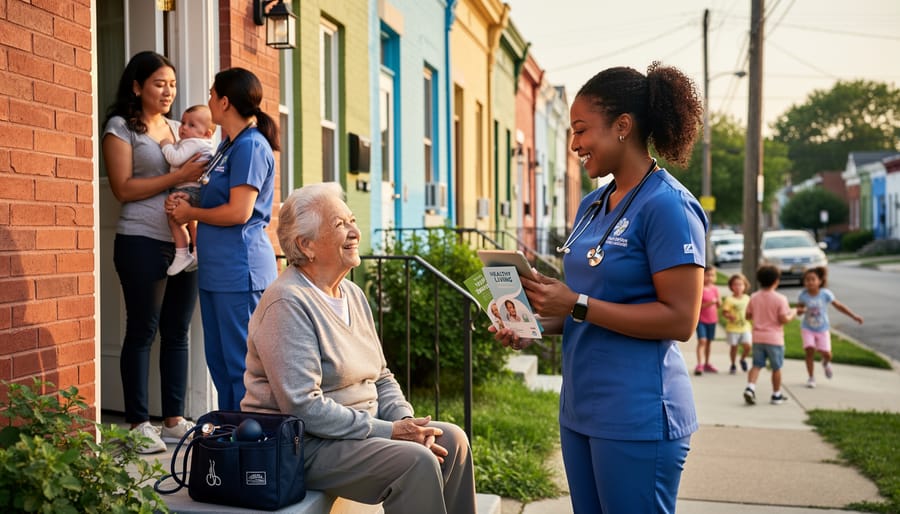
Community health workers serve as vital connectors between healthcare systems and the communities that need them most. They provide health education, help patients navigate medical appointments, conduct wellness screenings, and offer culturally appropriate support to underserved populations. Unlike traditional healthcare roles that require years of formal medical training, CHWs bring something equally valuable: trusted relationships within their communities and firsthand understanding of the barriers people face when accessing care.
The scope of their work is surprisingly broad. A CHW might spend Monday helping a diabetic patient understand medication instructions, Tuesday coordinating transportation for prenatal appointments, and Wednesday leading a nutrition workshop at a community center. They track patient progress, connect families with social services, and translate complex medical information into language people actually understand.
This career path offers something many job seekers crave: work that genuinely matters. Maria Rodriguez discovered this after years in retail management left her feeling unfulfilled. “I wanted to use my bilingual skills to help my community,” she explains. After completing a 120-hour CHW training program, she now works with immigrant families navigating the healthcare system. “Every day I see the difference. I’m helping people who feel invisible finally get the care they deserve.”
The job security is real too. Healthcare organizations increasingly recognize that CHWs reduce costly emergency room visits and improve patient outcomes. Hospitals, clinics, nonprofits, and public health departments are all competing for qualified candidates. Starting salaries typically range from $35,000 to $45,000, with experienced CHWs earning significantly more, plus comprehensive benefits in many positions.
The Core Competencies Every Community Health Worker Needs
Clinical Knowledge and Health Education
Community health workers need solid foundational knowledge to serve populations effectively. Training programs must cover essential health topics including chronic disease management, maternal and child health, nutrition basics, and infectious disease prevention. Most successful programs structure this education around 120 to 160 hours of core curriculum, according to the CDC’s CHW training toolkit and curriculum.
The real difference comes in teaching health information in culturally appropriate ways. Maria, a CHW serving immigrant communities in Texas, credits her training’s focus on plain-language communication for her success. She learned to translate complex medical terms into concepts her neighbors could understand and apply immediately.
Effective programs also emphasize hands-on patient education techniques. Role-playing exercises help trainees practice demonstrating proper medication use, explaining preventive screenings, and addressing common health misconceptions. These practical skills matter more than memorizing medical terminology.
Organizations should include modules on recognizing warning signs that require immediate professional care. CHWs aren’t clinicians, but they must confidently identify when to connect community members with doctors or emergency services. This balance protects both the worker and the people they serve.
Cultural Competency and Communication
Effective community health workers understand that trust isn’t granted automatically. It’s earned through genuine cultural awareness and skilled communication. Training programs that prioritize these competencies see measurably better health outcomes in the communities they serve.
Maria, a community health worker in Chicago’s predominantly Spanish-speaking neighborhoods, credits her success to specialized training in cultural humility. “I learned that knowing a language isn’t the same as understanding how people communicate about health,” she explains. Her program included modules on cultural beliefs about illness, family decision-making structures, and how to adapt health messaging without losing medical accuracy.
The most effective training programs incorporate practical communication techniques. Role-playing exercises help workers navigate sensitive conversations about chronic disease management, mental health, and preventive care. Workers learn to recognize how cultural norms influence health behaviors and medical adherence.
Language access extends beyond translation. Training should address health literacy levels, use of interpreters when needed, and visual communication tools. Organizations report that workers trained in these competencies achieve 40% higher patient engagement rates.
Building cultural competency also requires ongoing reflection. Programs should include regular debriefing sessions where workers share experiences, discuss challenges, and learn from peers serving different populations. This collaborative approach strengthens both individual skills and team effectiveness.
Case Management and Resource Navigation
Community health workers serve as essential bridges between healthcare systems and the communities they serve. Effective case management training equips them to assess individual needs, coordinate services, and follow up to ensure positive outcomes. This includes mastering intake procedures, documentation standards, and tracking client progress through various stages of care.
Training programs should focus on building knowledge of local resources across multiple sectors. This means understanding eligibility requirements for programs like Medicaid, SNAP benefits, housing assistance, and mental health services. Sarah Martinez, a CHW in Houston, recalls her early struggles: “I knew my community needed help, but I didn’t know where to start. Training that mapped out our local resource ecosystem transformed me from overwhelmed to effective.”
Organizations investing in this training component see measurable results. CHWs learn practical skills like completing insurance applications, scheduling specialist appointments, and addressing transportation barriers. Role-playing exercises prepare them for difficult conversations about sensitive topics, from financial hardship to substance use.
The most successful programs include technology training on electronic health records and case management software. This dual focus on human connection and digital literacy creates professionals who can document their impact while maintaining the trust and rapport that makes community health work so valuable.
Building an Effective CHW Training Program: The Red Canary Approach
Identifying the Right Candidates
Successful community health worker programs begin with identifying candidates who possess both the right qualities and authentic connections to the communities they’ll serve. Lived experience matters profoundly here. Maria Santos, who grew up in the same neighborhood where she now works as a CHW, explains: “I understand the barriers families face because I’ve faced them myself. That trust opens doors clinical credentials alone never could.”
Look for candidates who demonstrate cultural competency and existing relationships within target communities. Strong communication skills, empathy, and problem-solving abilities prove essential. Many effective CHWs come from non-traditional backgrounds, having worked as peer counselors, faith leaders, or parent advocates. This diverse experience becomes an asset rather than a limitation.
Geographic proximity matters too. Candidates who live in or near the communities they’ll serve bring invaluable insights about local resources, concerns, and cultural nuances. They’re more likely to maintain long-term commitment to the role.
Consider educational requirements carefully. While some positions require high school diplomas or equivalent certifications, don’t let formal education overshadow community knowledge and interpersonal abilities. The most successful programs evaluate candidates holistically, weighing lived experience alongside traditional qualifications. This balanced approach builds teams that truly reflect and understand the populations they serve, creating sustainable impact through authentic community partnerships.
Structured Onboarding and Certification Pathways
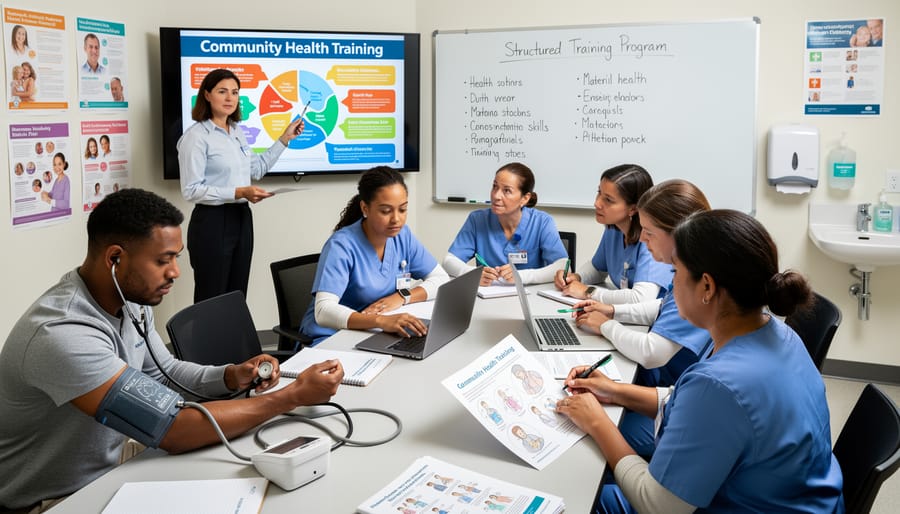
A well-designed certification pathway transforms community health worker training from a simple orientation into a recognized career foundation. Organizations that implement structured milestones see 40% higher retention rates among CHWs compared to those offering ad-hoc training. The key is creating measurable competencies at each stage, from basic health literacy to specialized skills in chronic disease management or maternal health.
Take Maria Rodriguez, who entered her CHW training program as a recent immigrant with limited healthcare knowledge. Through a tiered certification system, she completed foundational modules in three months, earned her state-recognized CHW certificate at six months, and qualified for advanced diabetes education certification within a year. Today, she leads training sessions for new recruits at her community health center.
Successful certification pathways include clear documentation of skills acquired, stackable credentials that build on previous learning, and alignment with state or national CHW certification requirements. Many programs now offer micro-credentials for specific competencies like motivational interviewing or electronic health record navigation. These bite-sized achievements maintain momentum and provide tangible proof of growing expertise.
For organizations, partnering with community colleges or professional associations adds credibility to your training program. Some health systems now offer tuition reimbursement for CHWs pursuing associate degrees in public health, creating a true career ladder. This investment pays dividends: certified CHWs demonstrate 35% better patient engagement outcomes and become invaluable mentors for incoming staff. The certification itself becomes both a recruitment tool and a retention strategy.
Mentorship and Ongoing Support
Successful community health workers don’t operate in isolation. Strong mentorship programs pair new CHWs with experienced professionals who have navigated similar challenges, creating relationships that extend beyond basic training. Consider Maria’s experience: after completing her certification, she was matched with a mentor who had worked in the same neighborhood for five years. When Maria struggled with engaging hesitant residents about diabetes screening, her mentor shared practical techniques that had worked in similar situations. That guidance prevented early frustration that might have led to burnout.
Peer support networks provide another essential layer of ongoing development. Monthly roundtable sessions where CHWs share experiences help workers realize they’re not alone in facing difficult situations. These gatherings become safe spaces to discuss emotional challenges, celebrate wins, and problem-solve together. Organizations that invest in structured mentorship see retention rates increase by 40% within the first two years.
Effective programs schedule regular check-ins rather than waiting for workers to ask for help. Weekly touchpoints during the first three months, transitioning to biweekly and then monthly sessions, create accountability while building confidence. This structured approach helps identify stress points before they become reasons to leave the field, protecting both your investment in training and the communities that depend on consistent care.
Success Story: From Uncertain to Unstoppable
Maria Rodriguez never imagined she’d become a healthcare professional. After spending 15 years working retail jobs with irregular hours and minimal benefits, she was searching for something more meaningful. When a local nonprofit announced a community health worker training program in her neighborhood, Maria took a chance that would reshape her entire future.
The eight-week training program covered everything from basic health education and disease prevention to cultural competency and patient advocacy. Maria learned how to conduct health screenings, connect residents with medical services, and navigate complex healthcare systems. But the transformation went deeper than technical skills.
“I discovered I had abilities I didn’t know existed,” Maria explains. “The training taught me how to communicate effectively with people from all backgrounds, how to solve problems under pressure, and how to be a real advocate for my community.”
Within three months of certification, Maria secured a full-time position with a federally qualified health center, earning $42,000 annually with comprehensive benefits. Her first year as a CHW, she personally connected 127 uninsured families to healthcare coverage and helped reduce emergency room visits by 23% among her assigned patient population.
The impact extended to her personal life too. Maria enrolled in college courses to pursue an associate degree in public health, a goal that seemed impossible during her retail years. Her children watched her study at the kitchen table each night, learning that career transformation is possible at any stage.
Today, Maria supervises three new CHWs and has become the training program’s most vocal advocate. She speaks at job fairs and community centers, sharing her story with others who feel stuck in dead-end jobs. Her message is simple: specialized training opens doors you didn’t know existed.
The numbers tell part of her success story. A stable salary, health insurance, paid time off. But the real measure is harder to quantify. Maria found purpose, developed professional skills, and created measurable change in her community. That’s the power of effective community health worker training.
Overcoming Common Training Challenges
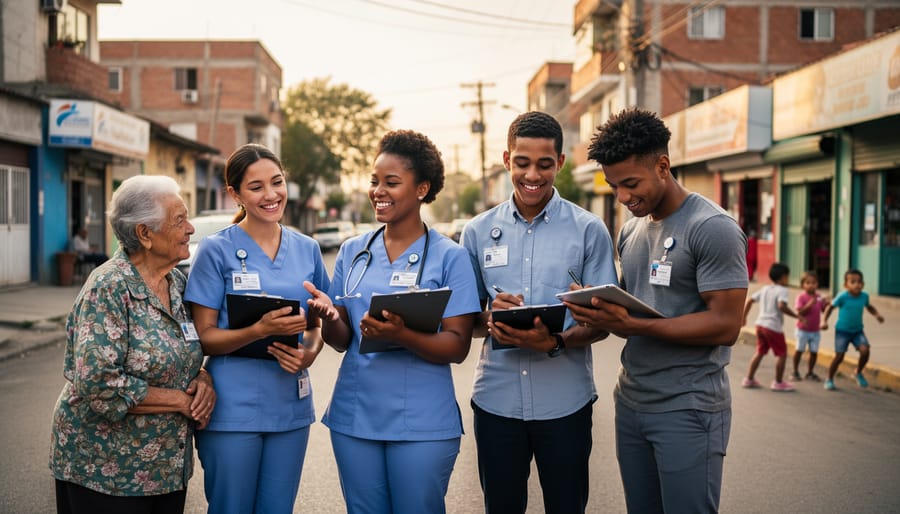
Training community health workers presents distinct challenges that can derail even well-intentioned programs. However, organizations that anticipate these obstacles and implement targeted solutions create stronger training outcomes and better prepared CHWs.
High turnover during training programs remains one of the most pressing issues. Maria Rodriguez, training coordinator at a community clinic in Phoenix, faced a 40% dropout rate in her first CHW cohort. She discovered that participants struggled to balance training with family responsibilities and part-time jobs. By shifting to weekend sessions and providing childcare stipends, her program’s completion rate jumped to 85%. The lesson? Flexibility isn’t a luxury in CHW training programs; it’s a necessity.
Here are the most common challenges organizations encounter, along with their impact and proven solutions:
| Challenge | Impact on Program | Proven Solution |
|---|---|---|
| Limited literacy levels among trainees | Difficulty with written materials, slower comprehension | Use visual aids, hands-on demonstrations, and audio resources |
| Inconsistent attendance | Knowledge gaps, reduced program effectiveness | Offer flexible scheduling, transportation assistance, recorded sessions |
| Cultural and language barriers | Miscommunication, reduced engagement | Provide materials in multiple languages, hire bilingual trainers |
| Limited funding for comprehensive training | Shortened programs, inadequate resources | Seek grant funding, partner with educational institutions, use free online tools |
Budget constraints affect nearly every CHW training initiative. Smart organizations address this by partnering with local nursing schools or public health departments to share resources and instructors. Some have successfully applied for federal grants specifically designated for community health workforce development, securing funding that covers both training costs and trainee stipends.
Technology access presents another significant barrier, particularly for remote training components. While online modules offer convenience, approximately 30% of CHW trainees in rural areas lack reliable internet access. Successful programs provide offline alternatives or establish computer labs at community centers where participants can complete digital coursework together.
The most effective training directors recognize that these challenges require proactive planning rather than reactive fixes. They build support systems into program design from day one, creating sustainable training models that empower both the organization and the future community health workers they’re developing.
Measuring Impact: Tracking Both Community and Career Outcomes
A successful CHW training program delivers measurable value on two fronts: the communities being served and the careers being built. Organizations that track both dimensions gain critical insights into their return on investment while identifying opportunities to strengthen their programs.
Start with community health metrics that directly connect to CHW activities. Track changes in preventable emergency room visits, chronic disease management rates, prenatal care attendance, and immunization completion within the populations your CHWs serve. One Texas-based healthcare system documented a 34% reduction in hospital readmissions after implementing their CHW program, providing concrete evidence of impact that justified continued investment in training and development.
For career outcomes, monitor employee progression through clearly defined competency levels. Document certification completions, skill acquisitions, and role advancements. Sarah Martinez began as an entry-level CHW conducting home visits for diabetes education. Within 18 months, her organization’s tracking system showed she had completed advanced motivational interviewing training and tobacco cessation certification. That data supported her promotion to senior CHW, where she now mentors new team members.
Create regular assessment intervals at 3, 6, and 12 months post-training. Use both quantitative data (number of clients served, successful referrals completed, health outcomes improved) and qualitative feedback from supervisors, community members, and the CHWs themselves. This combination reveals what’s working and where additional support is needed.
Consider retention rates as a key indicator. Programs with comprehensive training and clear advancement paths typically see CHW retention above 75% annually, compared to industry averages closer to 60%. High retention means experienced workers continue serving communities while reducing recruitment and retraining costs.
Smart measurement systems transform training from an expense into a strategic investment that builds healthier communities and sustainable careers simultaneously.
Training community health workers represents one of the smartest investments an organization can make. You’re not just building a capable workforce. You’re creating a bridge between healthcare systems and the communities that need them most, while opening career pathways for individuals ready to make a real difference.
The return on this investment shows up in measurable ways: improved health outcomes, reduced emergency room visits, better medication adherence, and stronger community trust. But the impact goes deeper. A well-trained CHW often becomes a catalyst for change, someone who understands both clinical protocols and the lived experiences of the people they serve.
Consider Maria, who started as a CHW in a diabetes prevention program with basic training. Two years later, after completing specialized certifications, she now leads training sessions for new hires and has helped reduce hospital readmissions in her district by 23%. Her story reflects what happens when organizations commit to comprehensive training and ongoing development.
At Red Canary, we’ve seen firsthand how the right training transforms both individual careers and organizational outcomes. Whether you’re a healthcare organization looking to build a CHW program or an individual exploring this rewarding career path, we’re here to help you succeed.
Ready to start building your community health workforce? Our staffing solutions connect you with qualified candidates eager to make an impact. If you’re interested in becoming a CHW, we can guide you toward opportunities that match your skills and aspirations. The communities we serve need dedicated professionals like you.
