
7 Employee Green Team Ideas for Building a Sustainable Workplace Culture

7 Employee Green Team Ideas for Building a Sustainable Workplace Culture
An employee green team transforms workplace culture by empowering staff to drive sustainability initiatives that reduce environmental impact while building leadership skills and boosting morale. These cross-departmental volunteer groups typically achieve 15-30% reductions in energy use, waste, or carbon footprint within their first year, while simultaneously creating professional development opportunities for participants who gain project management, stakeholder engagement, and strategic planning experience.
The most effective green teams operate with defined leadership structures, quarterly measurable targets, and executive sponsorship that legitimizes their work. When Sarah Chen launched a green team at her manufacturing facility in 2024, she secured buy-in by presenting a three-year roadmap showing projected cost savings of $180,000 alongside employee engagement metrics. Within 18 months, participation grew from 12 volunteers to 47 active members across five departments, proving that environmental initiatives resonate when they offer tangible professional growth alongside ecological impact.
For HR professionals and sustainability coordinators looking to launch or revitalize green teams in 2026, the challenge lies not in finding willing participants but in structuring initiatives that deliver lasting results. The following seven strategies provide proven frameworks that balance ambitious environmental targets with the career development opportunities that keep employees engaged long-term.
How We Selected These Green Team Ideas
When we curated these seven employee green team ideas, we didn’t just compile a random collection of environmental initiatives. Each idea met rigorous selection criteria designed to ensure real-world success for companies of all sizes and genuine professional growth for participants.
Our selection process focused on four essential elements:
- Actionability: Each initiative can be launched with existing resources and minimal upfront investment
- Scalability: The ideas work for teams of five or 500, adapting to different company structures and budgets
- Career development potential: Every role builds transferable skills like project management, data analysis, or stakeholder communication
- Measurable environmental impact: Success can be tracked through concrete metrics like waste reduction percentages or energy savings
We prioritized initiatives that create genuine leadership opportunities rather than token participation. The ideas featured here have proven track records at real organizations, demonstrating both environmental results and tangible career advancement for team members. Whether you’re an HR professional looking to boost employee engagement or a sustainability coordinator seeking executive buy-in, these criteria ensure you’re investing in programs that deliver lasting value on multiple fronts.
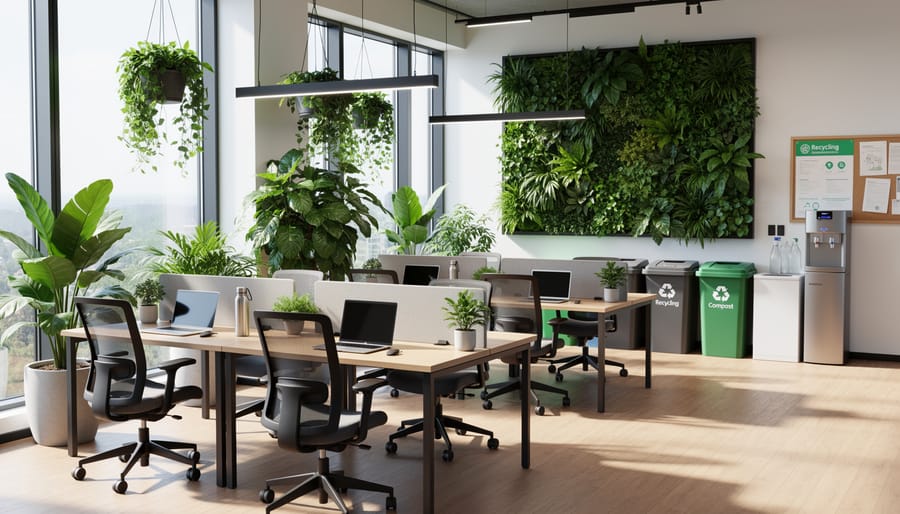
1. Waste Reduction and Recycling Champions Program
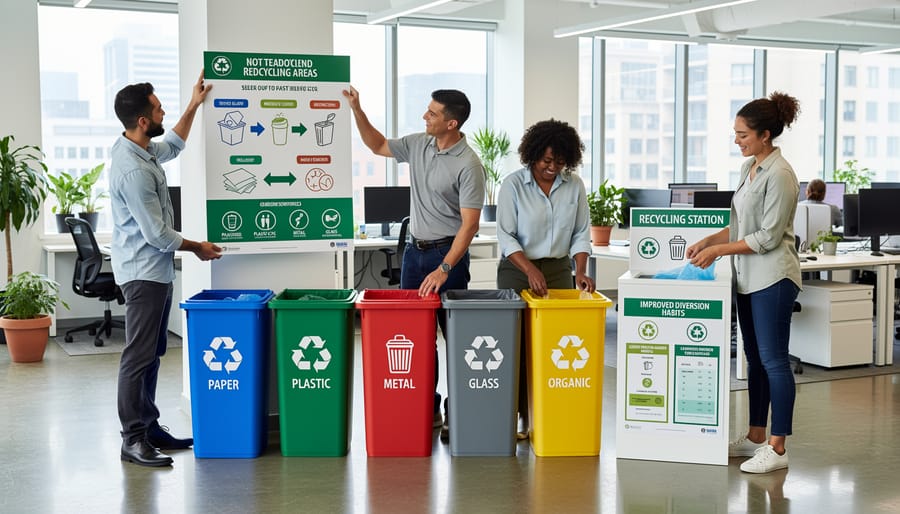
A Waste Reduction and Recycling Champions Program turns employee volunteers into sustainability leaders who transform how your workplace handles waste. Champions conduct comprehensive audits to identify what’s ending up in trash bins, then design and implement targeted recycling and composting stations throughout the facility. They track diversion rates monthly, creating data-driven reports that demonstrate environmental impact and cost savings.
This initiative delivers impressive results. A mid-sized tech company in Portland launched their Champions Program in 2025 with just five employees. Within eight months, they reduced landfill waste by 60% while cutting waste hauling costs by $18,000 annually. The team started by analyzing trash composition over two weeks, discovering that 70% of discarded items were recyclable or compostable. They installed clearly-labeled bins, created visual guides for proper sorting, and hosted quick training sessions at team meetings.
The professional development opportunities are substantial. Champions gain hands-on experience in project management, scoping initiatives, setting milestones, and coordinating across departments. They develop data analysis skills by tracking waste metrics and identifying trends. Many discover they enjoy environmental work enough to pursue sustainability certifications or pivot their careers toward corporate social responsibility roles.
Start by recruiting 3-5 enthusiastic volunteers, providing them with waste audit training, and setting a concrete goal like “reduce contamination in recycling bins by 40% within six months.” Give them visibility through monthly updates at all-hands meetings. Recognition matters, these volunteers are building skills while making your workplace genuinely greener.
2. Sustainable Commute Coordinator Network
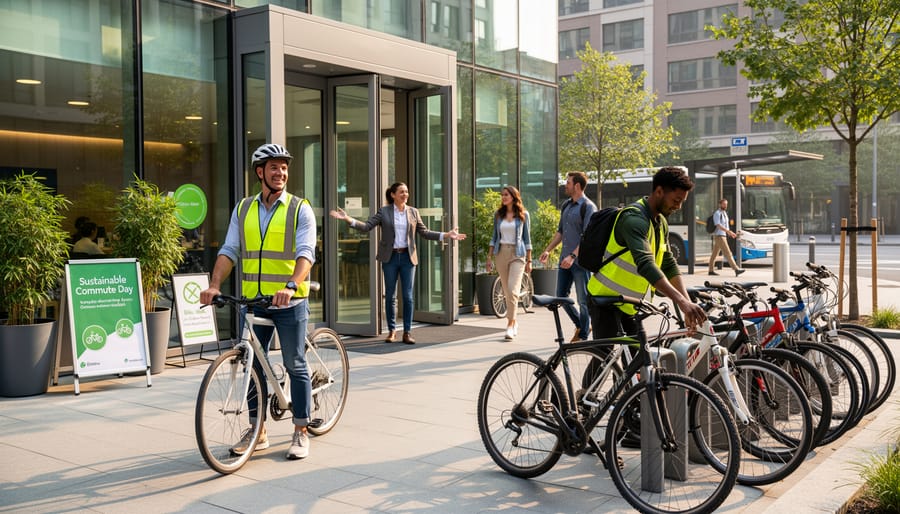
A Sustainable Commute Coordinator Network turns everyday employees into champions for greener transportation. These team members research local transit options, map carpool routes, organize bike-to-work challenges, and advocate for flexible remote policies. One mid-sized tech firm in Portland reduced single-occupancy vehicle commutes by 40% after launching coordinator-led initiatives that included carpool matching apps, secure bike parking, and subsidized transit passes.
Start by recruiting coordinators from different departments who already use alternative transportation, their firsthand experience makes them credible advocates. Equip them with quarterly budgets for incentives like gift cards for carpool participants or bike maintenance vouchers. Have coordinators survey employees to identify barriers (lack of bike storage, inconvenient bus routes, childcare timing) and propose solutions management can implement.
The role builds valuable skills in program management, data tracking, and cross-functional collaboration. Coordinators learn to analyze commute patterns, negotiate with transit agencies for group discounts, and create communication campaigns that change behavior. They also develop stakeholder management abilities by working with facilities teams on infrastructure needs and HR on policy updates.
Track success through metrics like miles reduced, parking spaces freed, or employee participation rates. Monthly coordinator meetings keep momentum strong and allow team members to share what’s working. This green team initiative delivers measurable environmental impact while giving employees leadership experience that translates directly to career advancement opportunities.
3. Energy Efficiency Audit Squad
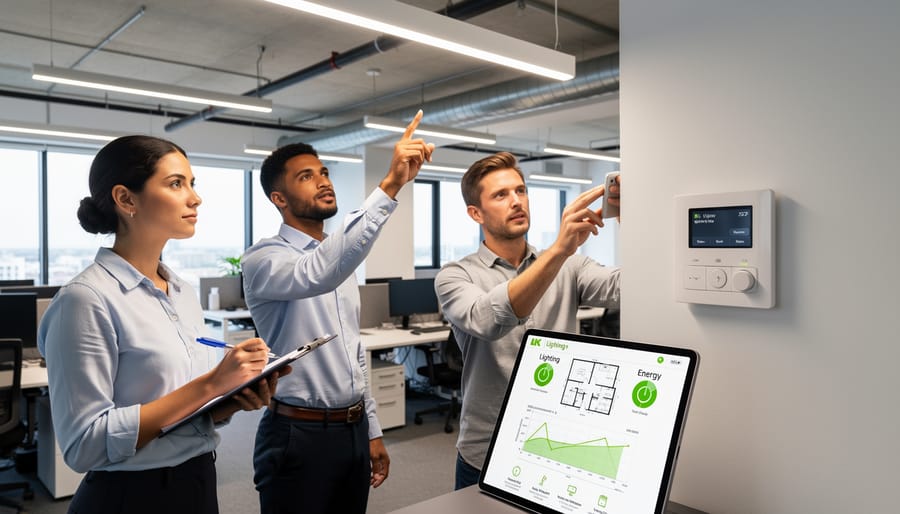
Creating an Energy Efficiency Audit Squad transforms employees into workplace detectives who hunt down energy waste while building valuable technical competencies. Team members learn to use thermal imaging cameras, analyze utility bills, and conduct walk-through assessments that identify lighting inefficiencies, HVAC issues, and phantom power drains from equipment left on standby.
The professional development angle here is substantial. Participants gain hard skills in data collection and analysis, learning to quantify savings in kilowatt-hours and dollars. They practice translating technical findings into executive presentations, a skill set that strengthens any resume. One manufacturing company reported that their audit squad reduced facility energy costs by 23% within eighteen months, with team leaders earning recognition that led to promotions in operations management.
Beyond the audits themselves, this green team drives behavior-change campaigns. Members design signage reminding colleagues to power down computers, organize competitions between departments to reduce energy consumption, and coordinate seasonal adjustments to temperature settings. These initiatives develop project management abilities and persuasive communication skills as team members learn to motivate peers without authority.
Start small by training three to five employees on basic energy assessment techniques through online courses or local utility workshops. Equip them with simple tools like outlet timers and light meters. Set quarterly reduction targets and celebrate wins publicly. The combination of measurable impact and skill-building makes this one of the most rewarding green team structures for both participants and employers.
4. Green Procurement Task Force
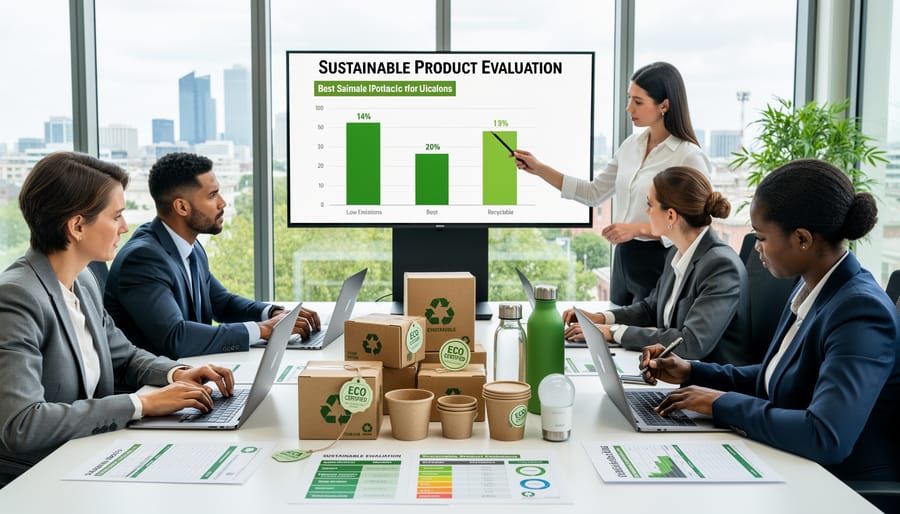
A Green Procurement Task Force turns everyday purchasing decisions into opportunities for environmental leadership. This team evaluates suppliers, researches eco-friendly alternatives, and develops responsible purchasing guidelines that ripple across your entire organization.
Start by assembling employees from departments that make frequent purchases, office managers, facilities staff, and administrative coordinators who understand your company’s supply needs. Task force members audit current vendors and products, researching certifications like Fair Trade, B Corp, or Energy Star. They might identify sustainable options for office supplies, cleaning products, break room essentials, or branded merchandise.
One mid-sized tech company’s procurement team switched to 100% post-consumer recycled paper, sourced reusable kitchenware, and negotiated contracts with local eco-certified vendors. Within eighteen months, they’d reduced packaging waste by 45% while discovering cost savings on bulk sustainable products. Their recommendations became company-wide purchasing policy.
This role develops genuine vendor management skills. Team members learn to evaluate suppliers, negotiate contracts, analyze cost-benefit trade-offs, and present recommendations to decision-makers. They practice strategic thinking by balancing environmental criteria with budget constraints and operational needs, exactly the kind of problem-solving that strengthens resumes and opens doors to procurement or operations roles.
The procurement task force also connects workplace sustainability efforts with broader movements. Members often collaborate with community changemakers by supporting local green businesses and suppliers committed to environmental responsibility. This work demonstrates how individual purchasing decisions, multiplied across an organization, create measurable environmental impact while building career-relevant expertise.
5. Community Environmental Partnership Program

Organizing employee volunteers for community environmental projects creates powerful connections between workplace sustainability and local impact. A community environmental partnership program mobilizes green team members to lead initiatives like tree planting events, watershed cleanups, or native habitat restoration, projects that deliver visible results while building skills in volunteer coordination and community outreach.
These partnerships work best when green team members take ownership of the relationship. Designate team leads to research local environmental nonprofits, coordinate volunteer schedules, and handle logistics like transportation and supplies. This structure develops project management capabilities and stakeholder relationship skills that transfer directly to professional advancement.
One manufacturing company’s green team partnered with a regional land conservancy to restore 12 acres of wetland habitat over 18 months. Employee volunteers contributed 800 hours across six events, learning ecological restoration techniques while strengthening cross-departmental relationships. The team lead, who coordinated with nonprofit staff and managed 40 volunteers per event, leveraged this experience to transition into a community relations role.
Start small with quarterly cleanup events before expanding to ongoing partnerships. Track participation rates, volunteer hours, and environmental metrics like pounds of trash removed or trees planted. These measurable outcomes demonstrate both community impact and employee engagement, making it easier to secure continued leadership support. Regular community projects also boost team morale by providing shared experiences outside the office environment.
6. Sustainability Education and Training Committee
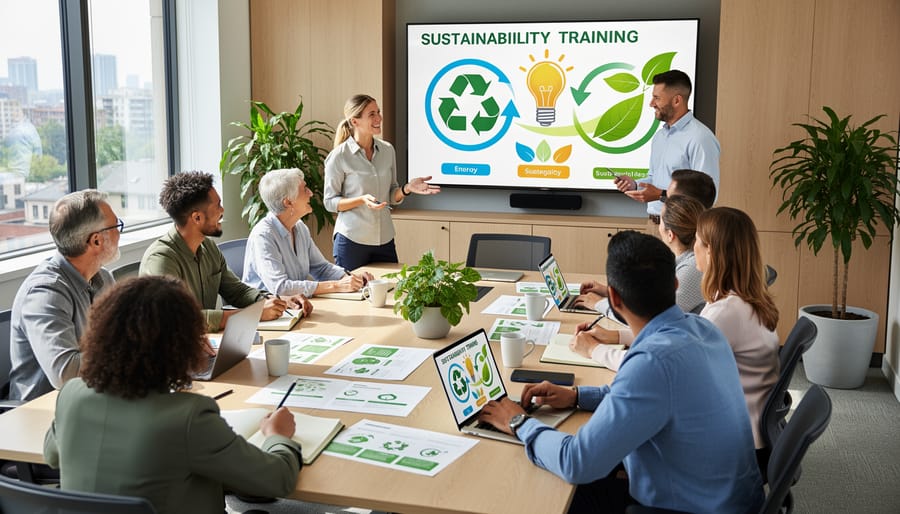
A Sustainability Education and Training Committee empowers employees to become environmental educators within your organization. This dedicated team designs and facilitates workshops, lunch-and-learn sessions, and orientation materials that build environmental literacy across all departments. Team members research sustainability topics, develop engaging presentations, and deliver training that transforms workplace behaviors.
The career development benefits are significant. Committee members sharpen presentation and public speaking skills by leading regular sessions. They build expertise in environmental topics, positioning themselves as subject-matter experts. Creating training materials develops instructional design capabilities and visual communication skills. Coordinating multi-department workshops strengthens project management and stakeholder engagement abilities.
Start with foundational topics like waste sorting best practices, energy conservation tips, and understanding your company’s environmental goals. Progress to more specialized sessions on supply chain sustainability, green certifications, or industry-specific environmental challenges. Incorporate sustainability modules into new employee orientation to embed environmental awareness from day one.
One financial services company launched a quarterly “Green Hour” series led by their education committee. Topics ranged from personal carbon footprints to sustainable investing trends. Attendance grew from 15 employees to over 100 within six months, and three committee members leveraged their facilitation experience to secure promotions into leadership development roles.
Make sessions interactive with quizzes, discussions, and practical challenges. Record presentations for remote employees and create resource libraries. Measure success through attendance rates, knowledge assessments, and behavioral changes like increased recycling participation or reduced energy consumption following training sessions.
7. Green Innovation Incubator Team

A Green Innovation Incubator Team transforms every employee into a potential sustainability champion by creating formal channels for environmental ideas to surface, develop, and scale. This cross-functional team solicits proposals from all departments, evaluates feasibility and impact, and pilots promising initiatives with measurable success metrics.
One manufacturing company established a quarterly pitch process where employees presented sustainability ideas to a green innovation panel. Within 18 months, they implemented twelve employee-generated solutions, including a packaging redesign that eliminated 40,000 pounds of plastic annually and a waste-heat recovery system that cut energy costs by 22%. Team members gained hands-on experience in business case development, stakeholder management, and change leadership, skills directly transferable to management roles.
The evaluation process itself builds critical thinking capabilities as team members analyze proposals through multiple lenses: environmental impact, financial viability, implementation complexity, and scalability. Participants develop entrepreneurial mindsets by learning to identify problems, propose solutions, secure resources, and measure outcomes, precisely the competencies employers seek when promoting internal candidates.
Effective recruitment marketing for the incubator team emphasizes these career development benefits alongside environmental goals. Structure the team with rotating membership every 12-18 months to maximize skill-building opportunities across your workforce. Successful incubators also celebrate both implemented ideas and valuable learning from pilots that don’t scale, reinforcing a culture where innovation outweighs perfection.
Getting Started: Launching Your Employee Green Team
Start with a compelling business case that ties environmental goals to measurable outcomes leadership cares about: cost savings, employee retention, and brand reputation. Present a concise proposal showing how a green team advances both sustainability and professional development, then identify executive sponsors who can champion the initiative and allocate resources.
To recruit and empower team members, cast a wide net across departments and seniority levels. Invite passionate volunteers while ensuring diverse perspectives, include frontline staff, middle management, and remote workers. Clearly define time commitments upfront (typically 2-4 hours monthly) to set realistic expectations.
Establish 3-5 specific, trackable goals for year one. Examples: reduce single-use plastics by 40%, increase recycling participation to 75%, or cut energy consumption by 15%. Assign owners to each goal and schedule quarterly reviews to celebrate progress and adjust strategies. Recognize employee changemakers publicly through internal communications, highlighting how their green team contributions build valuable career skills in project management, stakeholder engagement, and data-driven decision-making.
Frequently Asked Questions About Employee Green Teams
How much time do green team activities typically require?
Most green team initiatives require just 2-4 hours per month per member, often during regular work hours. Companies that treat green team participation as legitimate work time see higher engagement and better results than those expecting volunteers to contribute personal time.
How do you measure green team success?
Track both environmental metrics (waste diverted, energy saved, emissions reduced) and engagement indicators (participation rates, ideas generated, projects completed). The most successful programs also measure employee satisfaction and skill development alongside environmental impact.
What if employees aren’t initially interested in joining?
Start with a small core team of genuinely interested volunteers rather than recruiting broadly at launch. Once early projects show visible results and career development benefits, interest typically grows organically through word-of-mouth and success stories.
How does green team participation support career development?
Green team members build transferable skills in project management, cross-functional collaboration, data analysis, and leadership that enhance their career trajectory. Many participants report that green team experience helped them secure promotions or transition into sustainability-focused roles.
Beyond these common questions, remember that every workplace has unique needs and constraints. Your green team structure should reflect your company culture, available resources, and employee interests. Some teams thrive with monthly meetings and quarterly projects, while others prefer ongoing campaigns with flexible participation. The key is creating opportunities that feel meaningful rather than obligatory, letting passionate employees drive initiatives that matter to them while developing skills that advance their careers.
Employee green teams represent a powerful opportunity to advance both sustainability goals and employee development simultaneously. By launching even a small-scale initiative, you create pathways for team members to build leadership skills, expand their professional networks, and demonstrate tangible impact, all while contributing to your organization’s environmental responsibility.
At Red Canary, we’ve seen how workplace initiatives that empower individuals create lasting positive change. Whether you start with a simple recycling program or a comprehensive sustainability committee, the key is taking that first step. Your employees want meaningful ways to contribute, and green teams provide exactly that framework for growth and purpose.
Ready to build a more sustainable workplace culture? Start by identifying passionate employees, setting one achievable goal, and celebrating early wins. The environmental benefits you’ll achieve are matched only by the career development opportunities you’ll create for your team.
